7 Benefits of Babies Not Wearing Socks: Boost Natural Foot Growth
Babies benefit more from bare feet. Going sock-free supports natural arch formation, better balance, stronger muscles, and healthier gait development. Socks are useful in cold environments, but shouldn't be the default for growing feet.




Updated June 5, 2026
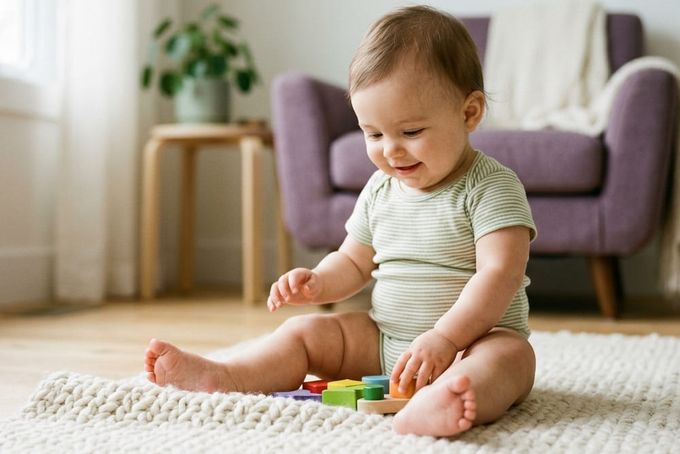
After that morning bath, you probably pop a pair of socks on your baby without even thinking about it. It feels like the safe thing to do. But those little feet might actually be better off without them, especially during those crucial early months of movement and development.
Let's go over what the research says about when babies need socks and what experience tells us about what happens when babies go bare.
Why Babies Shouldn't Always Have Their Feet Covered
When your baby starts crawling, pulling up on furniture, and taking those wobbly first steps, their feet are doing far more than just holding them up. The soles of their feet are gathering information about texture, pressure, and balance, and sending it straight to the brain [1].
Socks interrupt that process. They create a barrier between your baby's feet and the floor, reducing the sensory input their developing nervous system depends on. Over time, if socks become the default, this can slow down natural motor development and affect the way your child learns to walk.
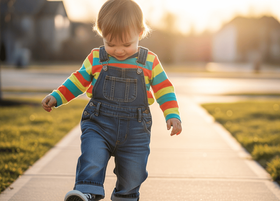
This is especially important between 6 and 15 months, when your baby transitions from sitting to standing to walking. These are the months where barefoot time matters most.
7 Benefits of Babies Not Wearing Socks
1. Supports Natural Foot Growth in Babies
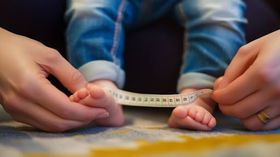
Bare feet allow the intrinsic foot muscles to activate properly. When your baby grips the floor with their toes, pushes off, and shifts their weight, those small muscles are working exactly as they should [2].
Socks prevent that full engagement, which can delay natural foot growth if they're worn too consistently in the early walking years.
2. Enhances Sensory Development in Baby Feet
The soles of your baby's feet are packed with nerve endings. Walking on different surfaces, smooth tiles, soft carpet, and cool grass, teaches the brain how to interpret texture and terrain [3].
This sensory development builds coordination and helps your child navigate their environment confidently. Babies kept in socks miss out on much of this early sensory learning.
3. Helps Arch Formation in Toddlers
Arch formation is a gradual process driven by muscle activation. Every time your baby grips the floor, curls their toes, and pushes through a step, the muscles responsible for arch development are being strengthened.
4. Improves Balance and Coordination in Babies
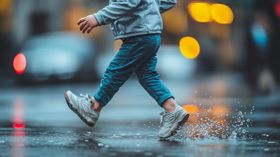
Balance starts in the feet. When your baby spreads their toes to grip the floor, they activate the stabilising muscles that keep them upright. Babies who learn to walk in socks tend to slip more, which makes them cautious and can slow confidence [5].
Going sock-free on safe indoor surfaces gives your baby the grip and sensory feedback they need to develop balance naturally. Improvements in coordination are usually visible within a few weeks of consistent barefoot time.
5. Promotes Good Posture and Gait Development in Toddlers
The walking pattern your child develops in their early years tends to stick. Babies who slip and slide in socks often compensate by adjusting how they shift their weight, and those compensations can lead to altered gait patterns over time [6].
Barefoot time during the learning-to-walk phase supports a more natural heel-to-toe movement, which lays the foundation for good posture and efficient walking well into childhood and beyond.
6. Strengthens Foot Muscles in Babies
Just like any other muscle group, the feet need to be used to grow strong. Gripping, spreading, and pushing through each step all work the small muscles of the foot [7]. Socks reduce that engagement, particularly the ability to fully splay the toes and feel the ground beneath them.
Babies who spend more time barefoot typically develop stronger, more flexible feet, which supports everything from balance to sport later in life.
7. Reduces the Risk of Overheating in Baby Feet
Babies regulate temperature primarily through their head and torso, not their feet. Many parents add socks out of habit, worried their baby feels cold. But unless the environment is genuinely cool (below around 22–24°C), socks can actually cause overheating and discomfort, particularly during sleep [8].
Letting your baby's feet breathe is not only better for development, but it's also more comfortable for them.
When Babies Should Wear Socks
Bare feet are not always the answer. Socks are helpful when the temperature drops, when surfaces are dirty or unsafe, or when your baby is unwell and needs warmth. During sleep, socks are only necessary if the room is genuinely cold.
When shoes are needed outdoors or on uneven surfaces, the same principles apply. You want footwear that protects without restricting. First Walkers sandals and soft-soled shoes are built with flexible soles and wide toe boxes that allow natural movement, so your child still gets the benefits of barefoot development even when they're wearing shoes.
References
1. Tfkadmin. (2024, June 3). Pulling to stand using furniture for children 7-12 months. Therapies For Kids. https://therapiesforkids.com.au/blog/pulling-to-stand-using-furniture-for-children-7-12-months/
2. Your baby’s first steps. (2021). Pediatric Patient Education. https://doi.org/10.1542/peo_document231
3. Mmskadm, & Mmskadm. (2025, February 12). Sensory Seekers – exploring babies and infants sensory experiences. Music + Movement. https://www.musicandmovement.org.uk/exploring-babies-and-infants-sensory-experiences/
4. Wang, Y., Jiang, H., Yu, L., Gao, Z., Liu, W., Mei, Q., & Gu, Y. (2023). Understanding the role of children’s footwear on children’s feet and GAIT Development: A Systematic scoping review. Healthcare, 11(10), 1418. https://doi.org/10.3390/healthcare11101418
5. Professional, C. C. M. (2026, April 20). Babinski Reflex (Plantar Reflex). Cleveland Clinic. https://my.clevelandclinic.org/health/articles/babinski-reflex-plantar-reflex
6. Hospodar, C. M., & Adolph, K. E. (2024). The development of gait and mobility: Form and function in infant locomotion. Wiley Interdisciplinary Reviews Cognitive Science, 15(4), e1677. https://doi.org/10.1002/wcs.1677
7. Kinney, M., & Kinney, M. (2024, February 15). Let’s talk foot health. College of Health and Human Sciences. https://chhs.source.colostate.edu/lets-talk-foot-health/
8. Karp, H. (2026, April 2). Is your baby overheating? Signs your baby is too hot. Happiest Baby. https://www.happiestbaby.com/blogs/baby/baby-overheating?srsltid=AfmBOooQqfycHROy7n9y3fLxD6jCgYxhIX5tRtovj9JRhdZSfmNKh16Z
Should babies always wear socks?
No. Bare feet support natural foot development. Socks are useful in cold environments, but shouldn't be the default.
Why should babies not wear socks while sleeping?
In normal room temperatures, socks can cause overheating during sleep. They're only needed if the room is genuinely cold.
Do newborns need socks in summer?
Generally no. Babies regulate temperature through the head and torso. In warm weather, socks can cause discomfort.
Can socks affect how my baby walks?
Yes. Socks reduce grip and sensory feedback, which can slow balance and coordination development during the early walking months.
What age should babies go barefoot?
From the moment they start moving. Bare foot time is most important between 6 and 18 months when babies are learning to stand and walk.